Updated October 2026
You apply moisturizer in the morning, again at lunch, and your face still feels tight by mid-afternoon. Makeup settles into fine lines, your cheeks look flat instead of fresh, and your skin seems to drink up every product without looking any better for it. If that sounds familiar, the issue may not be dry skin at all. It may be dehydrated skin, and the difference matters when you're choosing what actually helps.
At InjectAbility Clinic in Torrance, skin hydration is one of the most common concerns patients bring up, whether they're young professionals working in air-conditioned offices or longtime South Bay residents whose skin has weathered years of sun and coastal wind. This guide explains why skin loses water, who struggles with it most, and which in-clinic treatments can help restore that comfortable, healthy glow.
Dry skin is a skin type that produces too little oil, while dehydrated skin is a condition where the skin lacks water. Anyone can have dehydrated skin, including people with oily or acne-prone skin. That's why some people feel greasy and tight at the same time.
Dry skin often looks flaky or rough and tends to feel uncomfortable year-round. Dehydrated skin, on the other hand, usually shows up as dullness, tightness, more noticeable fine lines, and a crepey look when you gently pinch the cheek. It can come and go depending on the weather, your routine, and your lifestyle.
Understanding which one you're dealing with changes your approach. Dry skin generally needs richer, oil-replenishing products. Dehydrated skin benefits from ingredients and treatments that attract and hold water, plus habits that protect the skin barrier so moisture doesn't escape as quickly.
The most common causes are environmental exposure, a weakened skin barrier, and daily habits that strip moisture. Southern California offers a few unique challenges on top of the usual culprits.
Year-round UV exposure in Torrance gradually damages the skin barrier, and coastal breezes along the South Bay can pull moisture from the surface of the skin. When dry Santa Ana winds roll through in fall, many people notice their skin feels tight and irritated almost overnight.
Air conditioning, heating, and long hours in climate-controlled offices or cars lower the humidity around your skin. The American Academy of Dermatology recommends adding humidity with a humidifier and keeping showers short and warm rather than hot, which are simple ways to reduce moisture loss (see their tips for relieving dry skin).
Harsh cleansers, frequent scrubs, and stacking strong acids or retinoids can wear down the barrier. Once that protective layer is compromised, water evaporates from the skin more easily.
Skin hydration problems affect everyone, but the reasons differ depending on your age, work, and routine.
If your days involve long commutes, back-to-back meetings, flights out of LAX, and too much coffee, your skin is probably feeling it. Travel cabins are notoriously dry, late nights interfere with the skin's natural overnight repair, and skipped meals and water breaks add up. For this group, treatments with no downtime that fit into a lunch break tend to be the most realistic option.
Younger adults often have more skincare products than any generation before them, and that can be part of the problem. Layering several actives you saw online, such as exfoliating acids, retinoids, and vitamin C, without a plan can leave skin red, tight, and paradoxically dehydrated. Many younger patients see the biggest improvement by simplifying their routine and adding professional support rather than adding more products.
Many men skip moisturizer entirely and shave daily, which removes a thin layer of surface skin along with the hair. Combine that with outdoor sports, surfing, or golf under the South Bay sun, and skin can look rough and tired. A short professional treatment paired with a simple two-step routine often makes a noticeable difference.
Drinking enough water supports your overall health, but it usually isn't enough on its own to fix dehydrated skin. The outer layer of the skin depends heavily on a healthy barrier to hold onto moisture, and that barrier is affected by your environment and products more than your water bottle.
That said, true body dehydration can affect how you look and feel, so staying hydrated still matters. MedlinePlus explains the signs of dehydration and when it needs medical attention. Think of drinking water as the foundation and topical care plus professional treatments as the tools that target the skin directly.
InjectAbility offers several treatments that can improve skin hydration, ranging from no-downtime facials to an injectable designed to improve skin quality. The right choice depends on how much improvement you want and how long you'd like results to last.
DiamondGlow combines exfoliation, extraction, and serum infusion in one treatment. By clearing away dead skin and debris before delivering serums, it helps skin look smoother and more radiant right away. It can be performed on the face, neck, décolletage, back, and hands, and there's no downtime. The glow is immediate, and regular sessions help maintain it.
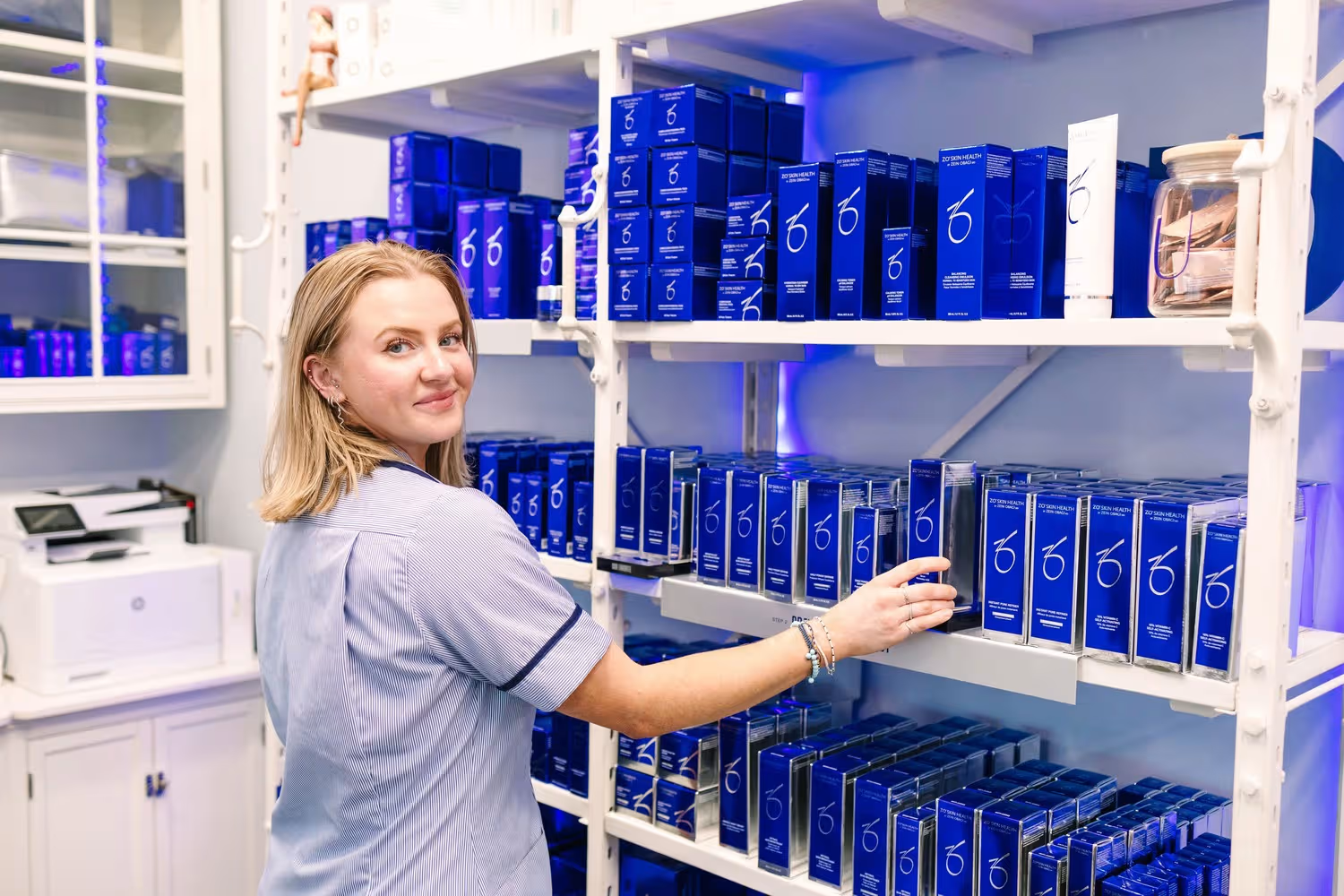
The clinic's aesthetic facials are customized to your skin's needs and include a ZO Ultra Hydration option for dryness and dullness. Facials are a great starting point if you're new to professional skincare or want something relaxing with no recovery time.
SKINVIVE is a hyaluronic acid microdroplet injectable from the Juvéderm family. Rather than adding volume like a traditional filler, it's placed in tiny amounts to improve skin smoothness and support a hydrated, glowing look. SKINVIVE is FDA-approved to improve cheek skin smoothness in adults over 21. Results typically last about six months or longer, and mild swelling or bruising is possible for a short time.
AQUAGOLD uses very fine microchannels to deliver a customized formula to the face and neck. Patients often choose it to address dullness, fine lines, and hydration in one visit.
The best treatment depends on your skin's current condition, your schedule, and your goals. A consultation helps sort out whether you need barrier repair, exfoliation, deeper hydration, or a combination.
Here's a simple way to think about it:
Many patients combine an in-clinic treatment with a simplified home routine for the most consistent results. The clinic's Solving Concerns page is also a helpful place to explore other skin quality options.
Daily habits make professional results last longer. Small, consistent changes protect your barrier and help your skin hold onto water.
Persistent dryness that doesn't improve with good skincare can sometimes be linked to conditions like eczema or psoriasis. If your skin is cracked, itchy, inflamed, or bleeding, a board-certified dermatologist or your primary care provider should evaluate it.
Aesthetic treatments are designed to improve skin quality and appearance, not to diagnose or treat skin disease. A good provider will tell you when your concern needs medical care first.
Dehydrated skin usually feels tight and looks dull, with fine lines that appear more noticeable, even if your skin also produces oil. Dry skin tends to look flaky and rough because it lacks oil. Many people have a mix of both.
Facials and DiamondGlow give an immediate glow that's best maintained with regular sessions. SKINVIVE results typically last about six months or longer, and results vary from person to person.
SKINVIVE is a hyaluronic acid injectable, but it's designed to improve skin quality and smoothness rather than add volume or change facial shape.
DiamondGlow and hydrating facials have no downtime. SKINVIVE may cause mild swelling or bruising for a short time.
Absolutely. Men often benefit from hydrating treatments because daily shaving, sun exposure, and a lack of moisturizer can leave skin rough and dull.
Your skin works hard against sun, wind, screens, and stress, and sometimes it needs more than another layer of lotion. Whether you want a fast glow before a weekend event or longer-lasting smoothness, the team at InjectAbility Clinic can build a skin hydration plan that fits your skin and your schedule. Patients visit from Torrance and nearby Carson, Gardena, Lomita, and Long Beach.
Book your free consultation by calling or texting 310-896-8027, booking online, or reaching out through the contact page. You deserve to love the way you look, and the way your skin feels, too.

Every experience the staff has gone above and beyond to make sure I was comfortable with my choice, during my treatment and confident in my results. They are kind and knowledgeable. Leslie is a master with Botox, and Emma is a wizard at skincare recommendations. Front staff is quick to respond and accommodating. Over the past year, I've pursued the Cool Sculpt and Cool Tone treatments, and am so happy with the results.
- Krista B.

I got filler for the first time with Dominique. She is such a sweetheart! She listened to all of my concerns and delivered the exact results I wanted! She didn't rush and took her time to achieve the look I was going for, natural youthful lips! She has a gentle hand and made me feel so at ease. I will be returning soon. And the clinic is pristine and all of the staff very welcoming.
- Elena Gonzalez
Words cannot express how much that I truly LOVE this place and everyone there!!!!! I have been coming there for the last 20 years or more, since it was in the original location on Post Ave. I will NOT go anywhere else!!!!They treat me with the most kindness and always accommodate me with any requests, until I am completely satisfied with my results. They answer all my emails immediately, even on days that I believe the office is closed! The owner is truly a master at what she does and truly cares.
- Julie Randall


